The drive to Hassan takes four hours from Bangalore on a clear morning. The landscape flattens out through Tumkur, then rises gently through the coffee-growing districts into the cooler, grass-heavy plateau where dairy farming thrives.
The Gowda family dairy cooperative has operated here since 1974. They are the source of every gram of ghee served at Tambi.
The Cooperative Model
Seventeen families supply milk to the cooperative, which processes, cultures, and churns on a shared facility. Each family maintains a herd of between 4 and 12 Hallikar cattle — the indigenous Karnataka breed that produces lower volumes of milk than commercial Holstein varieties, but milk with significantly higher fat content and a distinct grassy sweetness attributable to their mixed-pasture diet.
The Hand-Churning Process
Clarified butter is made commercially by direct cream separation and heat clarification. The Gowda cooperative uses a traditional two-stage process: whole milk is first cultured overnight into dahi, then churned to separate butter, which is then slowly clarified over firewood heat.
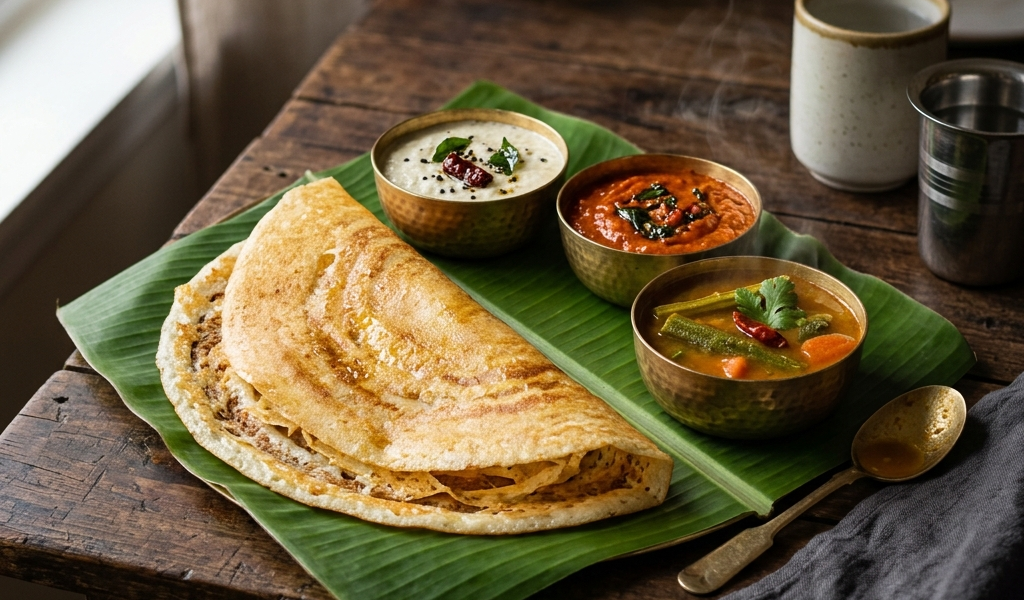
The culturing step introduces lactic acid that reacts during clarification to produce diacetyl — the compound responsible for the nutty, caramel-forward flavour that distinguishes traditional ghee from commercial ghee. You can taste it in the dosa. It is not a subtle difference.
Why We Will Never Switch
We have been offered commercial ghee at approximately 40% of the price we pay the Gowda cooperative. We declined.
The quality argument is real and measurable — the flavour of the ghee roast dosa would change. But there is a more fundamental reason: the cooperative employs 23 people in a region that has limited non-agricultural income options. The premium we pay stays in Hassan. It pays school fees and repairs roofs and keeps a traditional food supply chain operating that would otherwise not survive the economics of commercial dairy competition.