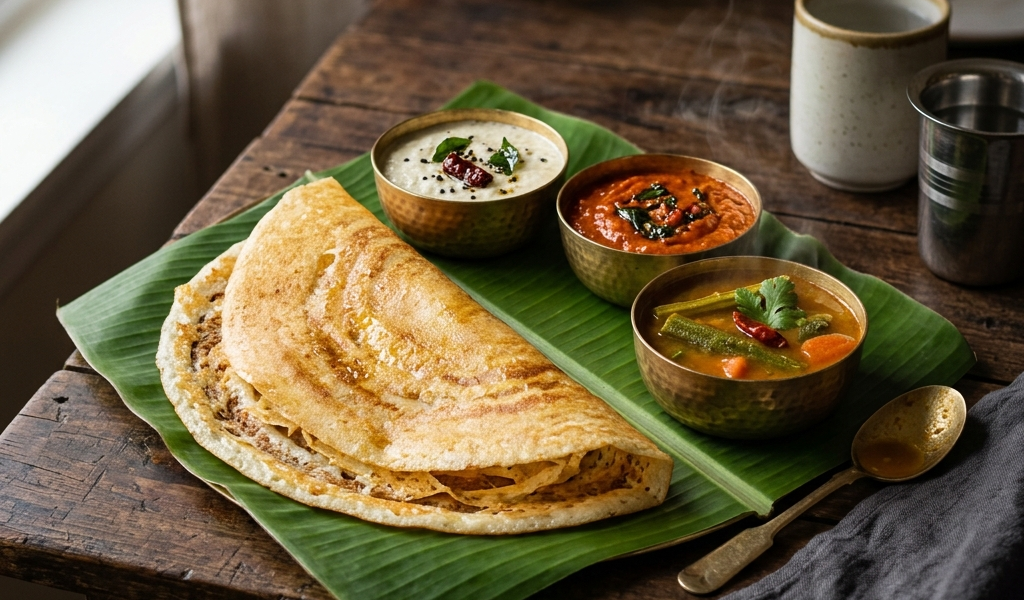
A ghee roast dosa is simple in its components: fermented batter, ghee, heat, and time. The simplicity is deceptive. The margin between a correct ghee roast and an incorrect one is measured in seconds and degrees, and both errors produce inferior results in opposite directions.
The Cast Iron Temperature
We use a 12kg cast iron griddle — a tawa that has been in continuous daily use for four years. The seasoning built into the iron surface through four years of ghee cooking is itself an ingredient that cannot be replicated by a new pan.
The correct surface temperature for a ghee roast is 210–220°C. At this temperature, the batter’s water content flash-vaporises on contact, creating the immediate sear that seals the dosa surface. Below 200°C, the batter spreads unevenly and the dosa steams rather than crisps. Above 230°C, the ghee smokes, the batter colours too quickly on the outside while the interior remains wet.
We use an infrared thermometer. We check the surface temperature before every round.
The Spread Speed
Spreading speed determines dosa thickness. A fast, firm outward spiral produces a thin, even sheet. A slow spread allows the outer ring to set while the centre is still being distributed — the result is an uneven thickness that crisps unevenly.
A correctly spread ghee roast dosa is between 1.5mm and 2mm at the centre, tapering to under 1mm at the edge. This taper means the edges become fully translucent and crisp while the centre retains a slight softness — the texture contrast that distinguishes a well-made dosa from a pancake with ambitions.
The Ghee Application and the Rest
Ghee goes on in two stages. A light pre-coating of the tawa surface before pouring creates the initial non-stick layer. A second, more generous application on the top surface of the spread batter — about 8–10 grams per dosa — is what creates the roast.
After the flame is off, the dosa rests on the tawa for 30 seconds. The stored heat of the cast iron continues the process. The dosa stiffens, the edges curl slightly, and the internal steam finishes its work.
Then it is served immediately. A ghee roast dosa has a working life of approximately four minutes before the crust softens. The schedule is the technique.